
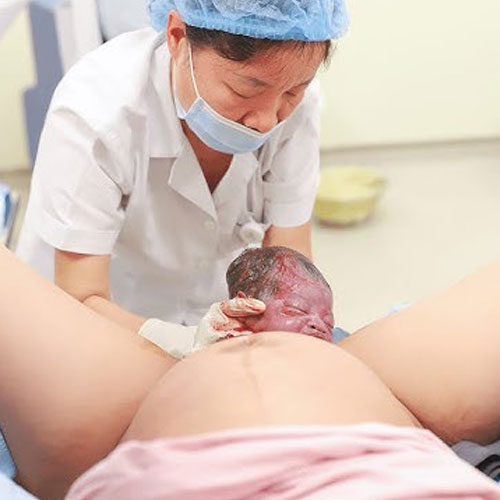
A normal vaginal delivery is the natural birth process occurring between 37–42 weeks, involving three stages: cervical dilation (labor), delivery of the baby, and expulsion of the placenta. It involves uterine contractions, full cervix dilation (10 cm), and the baby passing through the birth canal.
Stages of Normal Delivery :
First Stage (Labor) : The longest stage (12-19 hours) where contractions, often starting with a latent phase and ending with active labor, cause the cervix to dilate to 10 cm.
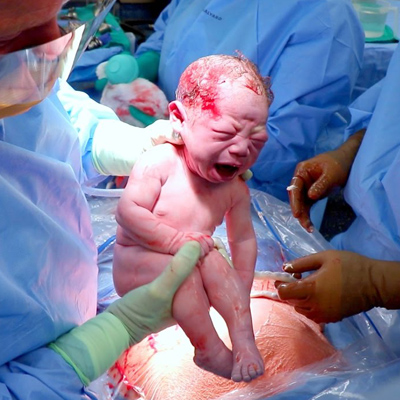
Second Stage (Pushing and Delivery) : Starts with full dilation and ends with the baby's birth, lasting from a few minutes to 3 hours. The baby moves through the birth canal using seven cardinal movements (engagement, descent, flexion, internal rotation, extension, external rotation, and expulsion).
Third Stage (Delivery of the Placenta) : Occurs 5 to 30 minutes after the baby is born. Mild contractions help detach and push the placenta out of the uterus.
Which delivery is best for a mother?
Normal delivery (vaginal birth) is generally considered best for the mother when there are no medical complications, offering faster recovery (2–6 weeks), less pain after birth, and quicker bonding with the baby. However, a C-section is safer and potentially life-saving in high-risk pregnancies, such as when the baby is in distress or too large.
What are the 4 types of labor?
The four primary types of labour, categorized by skill level and training, are unskilled, semi-skilled, skilled, and professional labour. These categories define the effort required in production, ranging from manual tasks with no training to specialized, highly educated roles.
How many cm for normal delivery?
For a normal vaginal delivery, the cervix must dilate to 10 centimeters (roughly 4 inches). This full dilation indicates the end of the first stage of labor and the start of the pushing phase, allowing the baby’s head to pass through the birth canal.
What are the 7 stages of delivery?
The 7 cardinal movements of labour are the distinct, sequential positional changes the fetus makes to navigate the bony pelvis during vaginal delivery: engagement, descent, flexion, internal rotation, extension, external rotation (restitution), and expulsion. These mechanisms typically occur consecutively to facilitate a successful birth.
Which delivery is less painful?
Painless vaginal delivery (using an epidural) is generally considered the least painful overall, as it manages labor pain while allowing for a faster recovery. While a C-section is pain-free during the procedure due to anesthesia, it results in more pain and limited mobility afterward. Natural vaginal delivery is the most painful during labor.


Services Offered


Treatments
About Gynaecology

Chambers


Video
You can get all kind of video that related to Gynaecologist & Obstetrician, Laparoscopic, Infertility related Disease.

FAQ
You can get all kind of question and answer that related to Gynaecologist & Obstetrician, Laparoscopic, Infertility related Disease.

Contact
By simply registering with your details you can reach to the doctors and book appointments in advance.

Feedback
By simply registering with your details you can reach to the doctors and enquiry in advance.


MBBS. MD (O & G), Consultant Gynaecologist & Obstetrician, Laparoscopic Surgeon, Infertility Specialist
Contact Person : Dr. (Mrs.) Chaitali Roy
CD-19, Saltlake, Sector - I,
Near City Center - I,
Kolkata: 700 064, West Bengal, India.